Back to technologies
HRV biofeedback & coherence training

HeartMath

An HRV biofeedback ecosystem that makes heart-rhythm patterns visible in real time and pairs them with guided breathing and coherence training.

HeartMath
Image shown from the technology's official or referenced educational source.
What it is

Understanding HeartMath

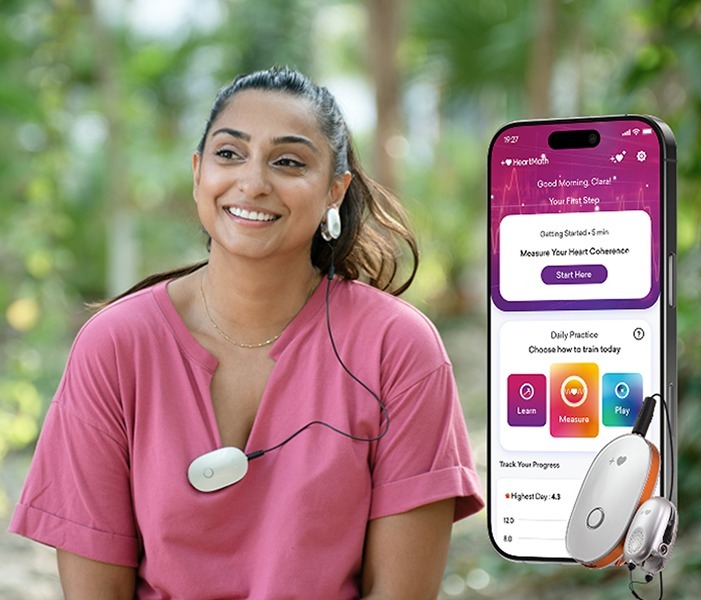
HeartMath systems such as Inner Balance use an ear-clip pulse sensor and app to measure beat-to-beat timing, display heart-rate variability patterns and calculate a proprietary coherence score. Professional tools include Inner Balance and emWave systems for guided in-person or virtual HRV biofeedback.

Key features

What makes this technology different

Real-time HRV and coherence feedback
Ear-clip sensor measures pulse timing using optical sensing
Sessions display heart-rhythm patterns as they change
Saved sessions can be used to track progress over time
Professional versions support in-office client training and reporting
What to expect

A typical session flow

Exact sessions vary by practitioner. This gives you a practical idea of how the technology may fit into an appointment.

1
Attach the HeartMath sensor and begin a session
2
Watch the heart-rhythm pattern and coherence feedback in real time
3
Practice paced breathing or a practitioner-guided self-regulation technique
4
Review the session and track progress across future practice
Why people explore it

What a session may offer you

Every practitioner works differently, but these are common wellness-oriented reasons someone may choose to explore this technology.

See your heart-rhythm pattern change in real time
Practice guided breathing with immediate feedback
Build a repeatable self-regulation routine
Track progress as coherence skills become more familiar
How practitioners use it

What a practitioner session can look like

HRV biofeedback sessions
Breathing practice
Stress-regulation coaching
Resilience and self-regulation training
What to know

Important context before choosing a practitioner

HeartMath coherence is a proprietary measure based on the pattern and order of HRV, not the same as conventional metrics such as SDNN or RMSSD.
HRV is highly individual and should be interpreted in context.
HeartMath training is not a substitute for medical evaluation when symptoms require clinical care.
Before you book

Questions worth asking your practitioner

A good practitioner should be comfortable explaining how they use the technology, what the session is intended to do, and what it cannot tell you.

Which HeartMath device do you use?
How do you explain coherence compared with standard HRV metrics?
Will I practice between sessions at home?
How do you track progress over time?